Dr. Ursula Trigos-Raczkowski
Profile
Assistant Professor of Mathematics
Vermont State University, Randolph

My research interests lie in the development and application of biomathematical models to explore population dynamics across diverse ecosystems. I employ a range of mathematical techniques, including partial differential equations, dynamical systems theory, stability analyses, and perturbation theory, to examine these complex systems.

Although my work traditionally emphasizes theoretical and analytical approaches, I have recently integrated numerical simulations to enhance the robustness of my models.

These models provide insights into the mechanisms driving competitive coexistence, the impact of competition on community structure and diversity, and the implications of biological trade-offs for understanding species interactions.

While the methodologies I employ are broadly applicable, my current research is specifically directed towards understanding tropical forests, with a focus on the complex dynamics within tropical tree systems which have applications to the climate crisis.

You are visitor …

Profile

You can download my complete CV here: Download CV (PDF)

Unable to display PDF. Click here to view it in a new tab.

Teaching

Teaching and Mentorship Philosophy

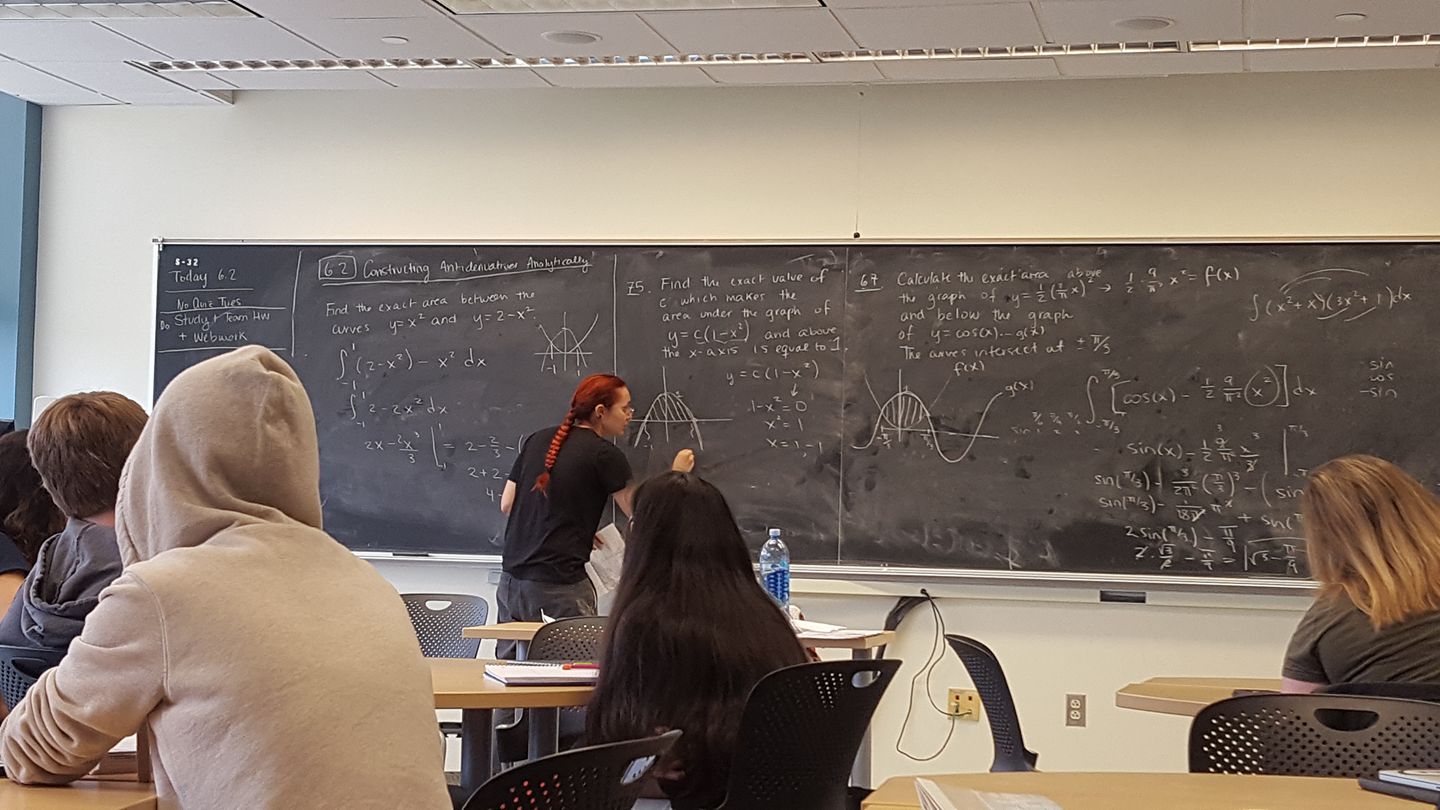
With over a decade of teaching experience, I am passionate about breaking down complex mathematical concepts into accessible, engaging lessons. From precalculus to advanced differential equations, I thrive on helping students of all backgrounds overcome challenges and discover excitement in subjects they once found intimidating. My teaching philosophy emphasizes clear explanations, hands-on practice, and creating a supportive environment where students feel confident, empowered, and prepared to apply their knowledge.

As a Latina woman in STEM, I am deeply committed to fostering diversity and inclusion in education. Drawing on my experiences mentoring first-generation and underrepresented students, I strive to create equitable opportunities and inspire the next generation of scholars through outreach, research mentorship, and inclusive pedagogy.

Teaching

Current Position

I am currently an Assistant Professor of Mathematics at Vermont State University Randolph, where I am dedicated to fostering student success through student-centered, accessible teaching. My teaching philosophy centers on helping students understand not just how to solve mathematical problems, but why the methods work—building confidence and mathematical intuition that empowers them to tackle challenges independently. I teach courses including Technical Mathematics I and II and Calculus I and II, creating inclusive learning environments where students from all backgrounds feel supported and valued in their mathematical journey.

Beyond the classroom, I maintain an active research program and continue to mentor doctoral students at various stages of their academic development. My scholarly work includes recent publications in mathematical modeling and ongoing research collaborations. Through this combination of responsive teaching, active scholarship, and dedicated mentorship, I strive to bring contemporary mathematical knowledge to my students while contributing to the broader mathematical community and preparing the next generation of scholars.

VTSU Class Resources

General information and extra practice for the courses I teach at Vermont State University, Randolph.

Canvas is your main source of information; the links below are for reviewing background material and getting more practice than we have time for in class.

Technical Mathematics
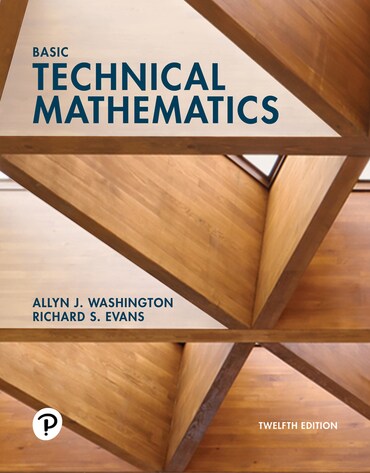
Basic Technical Mathematics, 12th edition
  • MAT 1311 — Technical Mathematics I
  • MAT 1312 — Technical Mathematics II

General Information

  • Textbook: Basic Technical Mathematics, 12th ed., Allyn J. Washington (ISBN 9780137529896). The 11th edition (ISBN 9780134437705) is also fine; physical or eBook.
  • Calculator: a standalone TI-83 or TI-84. No phone apps, no CAS calculators (e.g. TI-89), no AI tools on quizzes or exams.
  • Office hours: Green 105 and on Zoom; current times are on the syllabus and Canvas, or email for an appointment.

Tech Math I covers algebra and trigonometry for technical programs: algebraic expressions, geometry, right-triangle trigonometry, systems of linear equations, factoring and algebraic fractions, quadratic equations, exponents and radicals, and exponential and logarithmic functions. Tech Math II picks up where Tech Math I ends and covers the math needed for Engineering Technology and Calculus: vectors and oblique triangles, complex numbers, trigonometric functions of any angle, trigonometric identities and equations, and analytic geometry (Chapters 3, 8–12, 14, 20, and 21 of the same text). We move quickly, so reading the relevant sections in the text before and after class helps clarify what we did in class.

Extra Resources

  • Khan Academy — Algebra Basics. Make a free account as a learner, then choose "Algebra Basics" as your course. The "Foundations" unit covers negative numbers, absolute value, exponents, order of operations, and fractions. It is interactive, with short videos, reading, and practice problems.
  • Purplemath. Reading-based, with worked examples. Relevant modules include absolute value, fractions, fraction division, factoring numbers, metric conversions, negative numbers, rounding, significant digits, and cancelling units.
  • The textbook itself. Each section has worked examples followed by exercises with answers in the back; working the odd-numbered problems is the fastest way to find out which topics need more practice.

Calculus Sequence
Single Variable Calculus with Early Transcendentals, Sisson
  • MAT 1531 — Calculus I
  • MAT 2532 — Calculus II

General Information

  • Textbook: Single Variable Calculus with Early Transcendentals, Paul Sisson (ISBN 9781946158253); physical or eBook. Calc I covers Chapters 1–5; Calc II reviews transcendental and trigonometric differentiation and integration, then covers Chapters 4, 6, 7, and 10.
  • Calculator: a standalone TI-83 or TI-84 (graphing calculators are required in Calc II). No phone apps, no CAS calculators (e.g. TI-89), no AI tools on quizzes or exams.
  • Office hours: Green 105 and on Zoom; current times are on the syllabus and Canvas, or email for an appointment.

Calculus is the mathematics of change, built on two big questions: derivatives and integrals. Calc I spends roughly the first ten weeks on limits, the derivative and its applications (tangent lines, implicit differentiation, L'Hôpital's rule, extreme values, optimization, related rates), and the last four or five on the definite integral, Riemann sums, antiderivatives, and the Fundamental Theorem of Calculus. Calc II covers transcendental functions, techniques of integration (parts, partial fractions, trigonometric integrals and substitution, improper integrals), applications of the definite integral (area, volume, arc length, work), and sequences and series through Taylor and Maclaurin series. A lot of Calculus can be learned by reading the text closely, but searching a topic and reading a second explanation on one of the sites below often can be extremely helpful. Here are some resources I used when I was taking Calculus back in the olden days.

Extra Resources

  • APEX Calculus. The free supplemental text listed on the syllabus. Use it for a second explanation of any section, extra worked examples, and additional practice problems with answers.
  • Khan Academy — Calculus 1 and Calculus 2. Videos plus practice problems with instant feedback; good for drilling derivative and integral rules.
  • Paul's Online Math Notes. Complete, clearly written notes for Calculus I, II, and III, with worked examples and practice problems with full solutions. Also has an algebra and trig review, and printable cheat sheets.
  • Mathematics LibreTexts. Free open textbooks; the calculus texts are a good second reading when a section of our book is not landing.
  • GeeksforGeeks — Maths. Short topic pages with examples, useful for a quick reminder of a definition or rule.
About Me

About Me

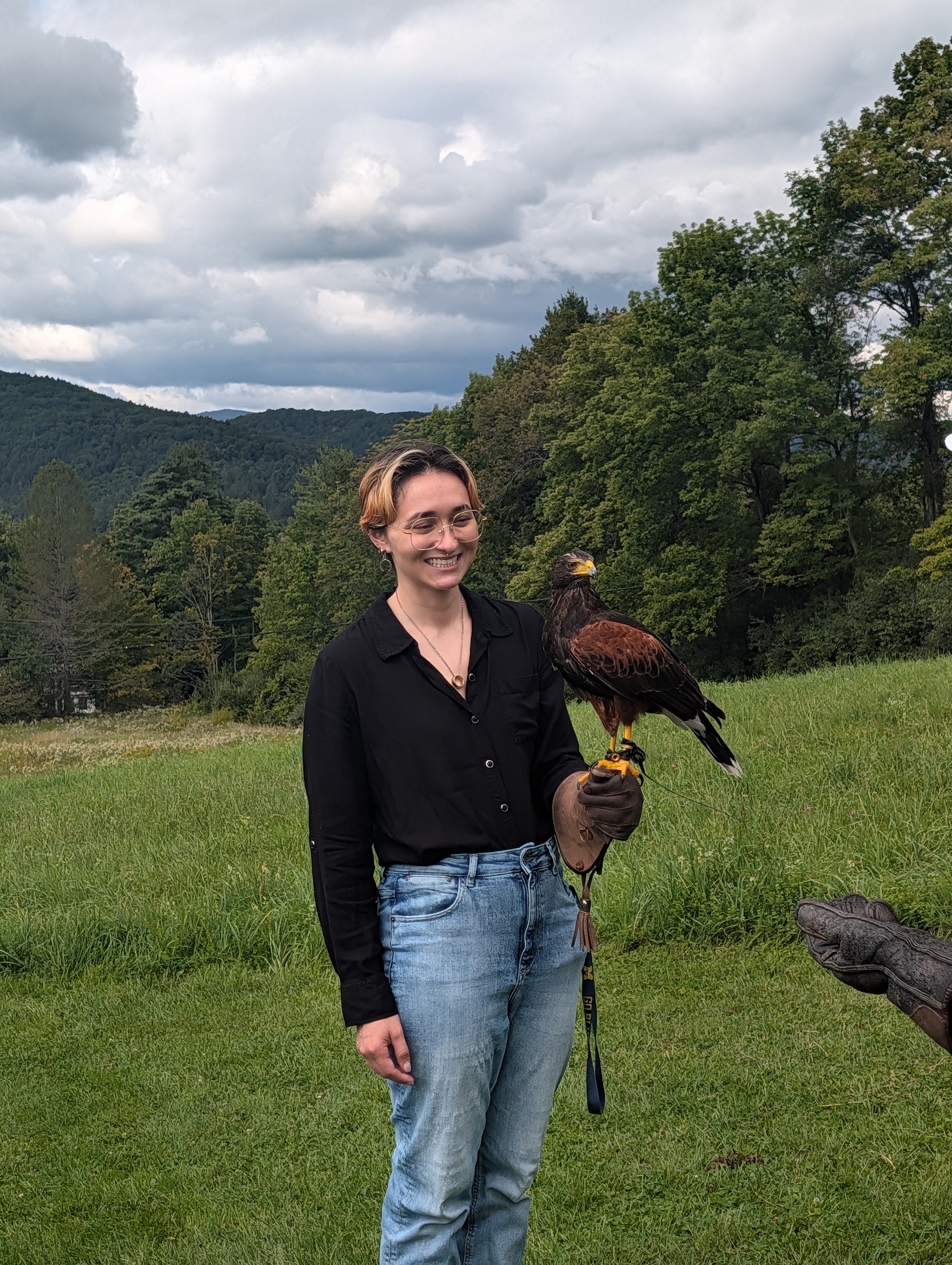
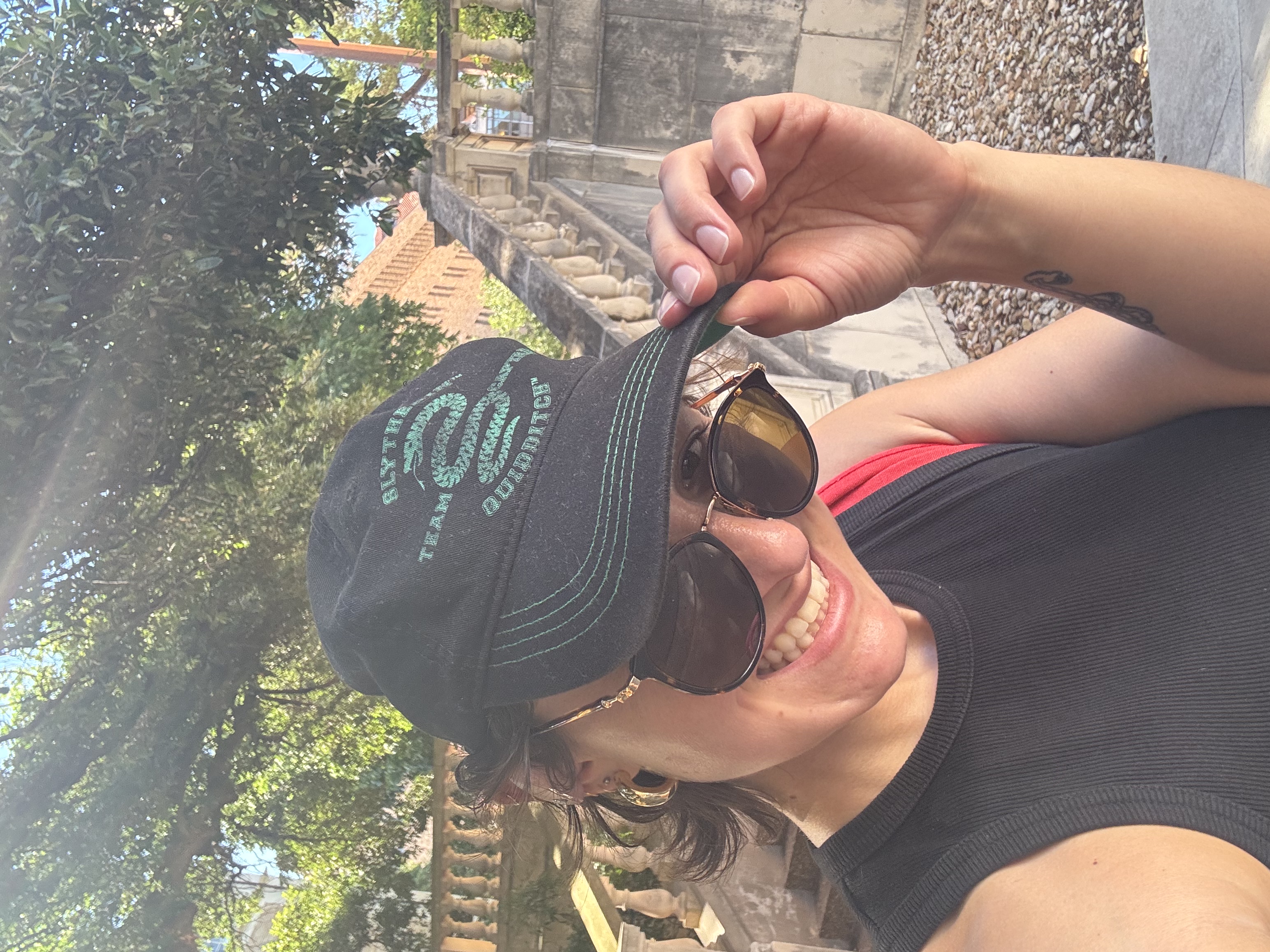
Hi, I'm Ursula—a mathematician, educator, and lifelong learner passionate about unraveling the complexities of the natural world. My work focuses on biomathematical modeling, where I explore population dynamics in diverse ecosystems. Beyond my academic pursuits, I'm an avid traveler and outdoors enthusiast who finds inspiration on hiking trails and in the tranquility of nature.

When I'm not immersed in equations or mentoring students, I indulge in creative hobbies like sewing, crocheting, and drawing. One of my favorite pastimes is crafting and wearing historically accurate clothing, blending my love for history and artistry. I also enjoy writing and have a penchant for fantasy and historical fiction, with book series like Sword of Truth, A Song of Ice and Fire, and The Saxon Stories being longtime favorites.

about

Recently, I've discovered a passion for fitness and strength training at the gym, adding balance to my daily life. I'm also an avid gamer and enjoy immersing myself in worlds like World of Warcraft and Hogwarts Legacy.

Whether it's exploring the outdoors, creating something with my hands, or solving a complex mathematical problem, I am driven by curiosity and a love for learning. Feel free to connect—I'm always excited to share ideas, discuss new projects, or swap book recommendations!

Education

  • Ph.D. in Applied and Interdisciplinary Mathematics, University of Michigan, Ann Arbor, 2023
  • M.S. in Mathematics, University of Michigan, Ann Arbor, 2018
  • B.S. in Mathematics, California State University Bakersfield, 2016